Buy erhu.eu ?
We are moving the project
erhu.eu .
Are you interested in purchasing the domain
erhu.eu ?
domain@kv-gmbh.de · 0541-91531010
Buy erhu.eu ?
How are pressure, volume flow, and flow velocity related?
Pressure, volume flow, and flow velocity are related through the principles of fluid dynamics. When there is an increase in pressure, the volume flow rate also increases, and the flow velocity also increases. This relationship is described by the equation of continuity, which states that the product of the cross-sectional area and the flow velocity is constant for an incompressible fluid. Therefore, as pressure increases, the fluid flow must also increase in order to maintain the constant product of area and velocity. **
What is a cash flow and a flow of goods?
Cash flow refers to the movement of money in and out of a business, including income from sales, expenses, and investments. It is a crucial indicator of a company's financial health and ability to meet its financial obligations. On the other hand, a flow of goods refers to the movement of physical products or materials through the supply chain, from production to distribution to consumption. Both cash flow and flow of goods are essential components of a business's operations and success, as they impact profitability, efficiency, and overall performance. **

Similar search terms for Flow
Top-Angebote
Products related to Flow:
-
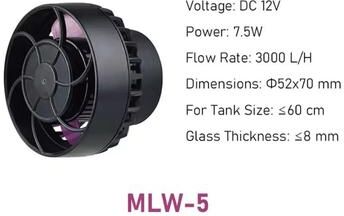
Uplift Essentials Professional Smart Wavemaker Flow Pump With LCD Controller flow 20Enhance your aquarium's ecosystem with this advanced Smart Wavemaker Flow Pump, designed to provide a wide, diffused outflow that eliminates dead spots and ensures optimal water circulation. Featuring cuttingedge sine wave technology, this pump...208,97 $*Shipping: 0,00 $Secure redirect to the provider
-
Uplift Essentials Professional Smart Wavemaker Flow Pump With LCD Controller flow 5Enhance your aquarium's ecosystem with this advanced Smart Wavemaker Flow Pump, designed to provide a wide, diffused outflow that eliminates dead spots and ensures optimal water circulation. Featuring cuttingedge sine wave technology, this pump...169,97 $*Shipping: 0,00 $Secure redirect to the provider


-
What is the difference between scatter flow and main flow?
Scatter flow refers to the movement of particles or objects in various directions, often in a random or disorganized manner. This can occur in a fluid or gas, where particles move in different directions due to turbulence or other forces. On the other hand, main flow refers to the dominant or primary direction of movement within a system. In a river, for example, the main flow is the central current that carries most of the water downstream, while scatter flow might refer to smaller eddies or swirls of water moving in different directions. **
-
Does Germany flow with the land where milk and honey flow?
The phrase "flowing with milk and honey" is often used to describe a place abundant in resources and prosperity. While Germany is a developed country with a strong economy and high standard of living, it may not necessarily be described as a place where milk and honey flow. However, Germany does have a rich agricultural sector, including dairy production, and is known for its high-quality food products. Overall, Germany may not be a literal representation of a land flowing with milk and honey, but it does enjoy a level of prosperity and abundance. **
-
How do you calculate the partial flow and the total flow?
To calculate the partial flow, you would need to determine the flow rate of a specific component or section of a system. This can be done by measuring the volume or mass of the substance passing through that particular point over a specific period of time. To calculate the total flow, you would sum up all the individual flow rates of the different components or sections of the system. This would give you the overall flow rate of the entire system. **
-
Where do rivers flow?
Rivers flow downhill due to gravity, following the path of least resistance. They typically start at higher elevations, such as mountains or hills, and flow towards lower elevations, eventually reaching a larger body of water like an ocean, sea, or lake. The flow of rivers can be influenced by various factors such as topography, geology, and human activities. **


Why do rivers flow?
Rivers flow due to the force of gravity pulling water downhill from higher elevations to lower elevations. The water in rivers also flows due to the shape of the land, with water naturally following the path of least resistance. Additionally, the flow of rivers is influenced by factors such as precipitation, snowmelt, and groundwater seepage, which contribute to the volume of water in the river and its speed of flow. **
How does electricity flow?
Electricity flows through a circuit in a closed loop, starting at the power source (such as a battery or power outlet) and traveling through a conductor, such as a wire. The flow of electricity is driven by the difference in electrical potential between the positive and negative terminals of the power source. As the electrons move through the circuit, they encounter resistance, which can come from components like light bulbs or motors, causing them to do work before returning to the power source to complete the circuit. **
Top-Angebote
Products related to Flow:
-
Uplift Essentials Professional Smart Wavemaker Flow Pump With LCD Controller flow 10Enhance your aquarium's ecosystem with this advanced Smart Wavemaker Flow Pump, designed to provide a wide, diffused outflow that eliminates dead spots and ensures optimal water circulation. Featuring cuttingedge sine wave technology, this pump...194,97 $*Shipping: 0,00 $Secure redirect to the provider
-
How are pressure, volume flow, and flow velocity related?
Pressure, volume flow, and flow velocity are related through the principles of fluid dynamics. When there is an increase in pressure, the volume flow rate also increases, and the flow velocity also increases. This relationship is described by the equation of continuity, which states that the product of the cross-sectional area and the flow velocity is constant for an incompressible fluid. Therefore, as pressure increases, the fluid flow must also increase in order to maintain the constant product of area and velocity. **
-
What is a cash flow and a flow of goods?
Cash flow refers to the movement of money in and out of a business, including income from sales, expenses, and investments. It is a crucial indicator of a company's financial health and ability to meet its financial obligations. On the other hand, a flow of goods refers to the movement of physical products or materials through the supply chain, from production to distribution to consumption. Both cash flow and flow of goods are essential components of a business's operations and success, as they impact profitability, efficiency, and overall performance. **
-
What is the difference between scatter flow and main flow?
Scatter flow refers to the movement of particles or objects in various directions, often in a random or disorganized manner. This can occur in a fluid or gas, where particles move in different directions due to turbulence or other forces. On the other hand, main flow refers to the dominant or primary direction of movement within a system. In a river, for example, the main flow is the central current that carries most of the water downstream, while scatter flow might refer to smaller eddies or swirls of water moving in different directions. **
-
Does Germany flow with the land where milk and honey flow?
The phrase "flowing with milk and honey" is often used to describe a place abundant in resources and prosperity. While Germany is a developed country with a strong economy and high standard of living, it may not necessarily be described as a place where milk and honey flow. However, Germany does have a rich agricultural sector, including dairy production, and is known for its high-quality food products. Overall, Germany may not be a literal representation of a land flowing with milk and honey, but it does enjoy a level of prosperity and abundance. **
Similar search terms for Flow
-
Uplift Essentials Professional Smart Wavemaker Flow Pump With LCD Controller flow 20Enhance your aquarium's ecosystem with this advanced Smart Wavemaker Flow Pump, designed to provide a wide, diffused outflow that eliminates dead spots and ensures optimal water circulation. Featuring cuttingedge sine wave technology, this pump...208,97 $*Shipping: 0,00 $Secure redirect to the provider
-
Uplift Essentials Professional Smart Wavemaker Flow Pump With LCD Controller flow 5Enhance your aquarium's ecosystem with this advanced Smart Wavemaker Flow Pump, designed to provide a wide, diffused outflow that eliminates dead spots and ensures optimal water circulation. Featuring cuttingedge sine wave technology, this pump...169,97 $*Shipping: 0,00 $Secure redirect to the provider
-
Uplift Essentials Professional Smart Wavemaker Flow Pump With LCD Controller flow 30Enhance your aquarium's ecosystem with this advanced Smart Wavemaker Flow Pump, designed to provide a wide, diffused outflow that eliminates dead spots and ensures optimal water circulation. Featuring cuttingedge sine wave technology, this pump...225,97 $*Shipping: 0,00 $Secure redirect to the provider
-
How do you calculate the partial flow and the total flow?
To calculate the partial flow, you would need to determine the flow rate of a specific component or section of a system. This can be done by measuring the volume or mass of the substance passing through that particular point over a specific period of time. To calculate the total flow, you would sum up all the individual flow rates of the different components or sections of the system. This would give you the overall flow rate of the entire system. **
-
Where do rivers flow?
Rivers flow downhill due to gravity, following the path of least resistance. They typically start at higher elevations, such as mountains or hills, and flow towards lower elevations, eventually reaching a larger body of water like an ocean, sea, or lake. The flow of rivers can be influenced by various factors such as topography, geology, and human activities. **
-
Why do rivers flow?
Rivers flow due to the force of gravity pulling water downhill from higher elevations to lower elevations. The water in rivers also flows due to the shape of the land, with water naturally following the path of least resistance. Additionally, the flow of rivers is influenced by factors such as precipitation, snowmelt, and groundwater seepage, which contribute to the volume of water in the river and its speed of flow. **
-
How does electricity flow?
Electricity flows through a circuit in a closed loop, starting at the power source (such as a battery or power outlet) and traveling through a conductor, such as a wire. The flow of electricity is driven by the difference in electrical potential between the positive and negative terminals of the power source. As the electrons move through the circuit, they encounter resistance, which can come from components like light bulbs or motors, causing them to do work before returning to the power source to complete the circuit. **
* All prices are inclusive of VAT and, if applicable, plus shipping costs. The offer information is based on the details provided by the respective shop and is updated through automated processes. Real-time updates do not occur, so deviations can occur in individual cases. ** Note: Parts of this content were created by AI.