Buy erhu.eu ?
We are moving the project
erhu.eu .
Are you interested in purchasing the domain
erhu.eu ?
domain@kv-gmbh.de · 0541-91531010
Buy erhu.eu ?
How can adverbial clauses be transformed into adverbial phrases?
Adverbial clauses can be transformed into adverbial phrases by removing the subject and verb of the clause and keeping only the modifying words. This results in a shorter phrase that still conveys the same information as the original clause. For example, the adverbial clause "When the sun sets" can be transformed into the adverbial phrase "At sunset." This transformation helps to simplify sentences and make them more concise. **
How can adverbial phrases be used instead of adverbial clauses?
Adverbial phrases can be used instead of adverbial clauses to provide additional information about the verb, adjective, or adverb in a sentence. Adverbial phrases are often shorter and more concise than adverbial clauses, making them a more efficient way to convey the same information. For example, instead of saying "When the sun sets, we will go for a walk," you can use the adverbial phrase "At sunset, we will go for a walk." This simplifies the sentence while still conveying the same time-related information. **
Similar search terms for Adverbial
Top-Angebote
Products related to Adverbial:
-
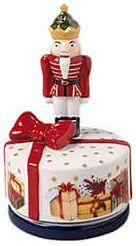
Villeroy & Boch Nostalgic Melody Turning Nutcracker Music BoxBring timeless elegance to your festive décor with the Nostalgic Melody Turning Nutcracker Music Box from Villeroy & Boch. This beautifully detailed porcelain figurine slowly rotates to Waltz of the Flowers, filling your home with the enchanting charm of a classic Christmas ballet. A treasured keepsake or gift that brings joy year after year. Dimensions: 9cm (L) x 9cm (W) x 14.6cm (H). Weight: 0.46kg.35,01 £*Shipping: 3,50 £Secure redirect to the provider
-
Villeroy & Boch Nostalgic Melody Turning Christmas Tree Music BoxThe Villeroy & Boch Nostalgic Melody Turning Christmas Tree Music Box adds festive charm to your home with its intricate hand-painted design and durable ceramic construction. Bring the spirit of the season into your space with this compact decoration, perfect for tabletops or mantels. Its sturdy base ensures stability, allowing you to showcase it confidently throughout the holidays. Simply twist the key to start the festive tune and set your tree up on display to immerse yourself in the merriment of Christmas. Whether it is placed on a dining table, coffee table or displayed on a mantlepiece, this music box will perfectly compliment other pieces from the Nostalgic Melody range. Made from premium Porcelain. Dimensions: 16.2(H) cm. Hand washing recommended. Weight: 0.5kg.37,71 £*Shipping: 3,50 £Secure redirect to the provider
-
World Rug Gallery Traditional Folk Floral Power Loomed Indoor Area RugDetails: Add lasting style to your home with this Ivory Cream Traditional Folk Floral Area Rug. The classic ivory botanical floral design pairs effortlessly with virtually any decor, making it a natural fit for your living room, bedroom, or entryway.147,99 $*Shipping: 0,00 $Secure redirect to the provider
-
Momeni Harmony Hand Tufted Wool Traditional Floral Area Rug.Decorate your home with this alluring medallion patterned area rug. The antique-style embellishment of this traditional area rug adds ornamental flourish to floors throughout the home.160,91 $*Shipping: 0,00 $Secure redirect to the provider


-
What are adverbial clauses and what are adverbial determinations? Help!
Adverbial clauses are groups of words that function as adverbs in a sentence, providing information about time, place, manner, or reason. They often begin with subordinating conjunctions such as "when," "where," "how," or "why." Adverbial determiners, on the other hand, are words or phrases that modify a verb, adjective, or other adverb by providing additional information about time, frequency, degree, or manner. They can include words like "often," "very," "soon," or "almost." Both adverbial clauses and adverbial determiners help to add detail and specificity to a sentence. **
-
How do you transform adverbial determinations into adverbial clauses? Please help.
To transform adverbial determinations into adverbial clauses, you need to add a subject and a verb to the adverbial determination. For example, the adverbial determination "after the party" can be transformed into the adverbial clause "after we left the party." This transformation allows the adverbial determination to function as a complete clause within a sentence. Additionally, you may need to adjust the tense and structure of the adverbial determination to fit the context of the sentence. **
-
What are adverbial particles?
Adverbial particles are words that are used to modify verbs, adjectives, or other adverbs. They are often used to indicate direction, location, or manner. In English, adverbial particles are commonly used in phrasal verbs, where they are combined with a verb to create a new meaning. For example, in the phrasal verb "look up," the adverbial particle "up" modifies the meaning of the verb "look." **
-
What is the difference between formulating an adverbial clause as an adverbial phrase and formulating an adverbial phrase as an adverbial clause? Aren't they the same thing?
Formulating an adverbial clause as an adverbial phrase involves expressing a clause (a group of words containing a subject and a verb) as a single adverbial phrase, typically by removing the subject and verb. On the other hand, formulating an adverbial phrase as an adverbial clause involves expanding a phrase (a group of related words without a subject and verb) into a full clause by adding a subject and verb. While both adverbial clauses and adverbial phrases serve to modify verbs, adjectives, or other adverbs, they are not the same thing due to their structural differences and the presence or absence of a subject and verb. **

How do adverbial clauses work?
Adverbial clauses function as adverbs within a sentence, providing information about time, place, manner, condition, purpose, or reason. They often begin with subordinating conjunctions such as "when," "where," "how," "if," "because," and "although." These clauses can modify verbs, adjectives, or other adverbs, adding detail and context to the main clause. Adverbial clauses can be placed at the beginning, middle, or end of a sentence, and they help to connect ideas and show the relationship between different parts of a sentence. **
What is an instrumental adverbial?
An instrumental adverbial is a type of adverbial that provides information about the means or instrument used to perform an action. It answers the question "how?" or "by what means?" For example, in the sentence "She cut the vegetables with a knife," the adverbial phrase "with a knife" is instrumental, indicating the tool used to perform the action of cutting. Instrumental adverbials are important for providing additional details about the action being described. **
Top-Angebote
Products related to Adverbial:
-
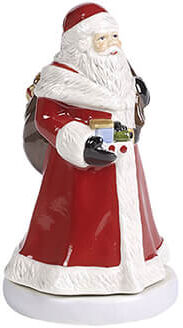
Villeroy & Boch Nostalgic Melody Turning Santa Music BoxBring the magic of Christmas to life with this charming Nostalgic Melody music box from Villeroy & Boch. Featuring a finely detailed, rotating Santa Claus figurine and a built-in wind-up mechanism that plays “Santa Claus Is Coming to Town,” this decorative piece captures the warmth and wonder of the festive season. Crafted from high-quality porcelain, it's a treasured keepsake that adds joy to every Christmas celebration. Dimensions: 8.7cm (L) x 8.6cm (W) x 15cm (H). Weight: 0.10kg.35,01 £*Shipping: 3,50 £Secure redirect to the provider
-
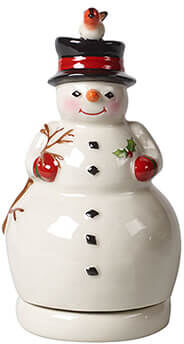
Villeroy & Boch Nostalgic Melody Turning Snowman Music BoxCelebrate the spirit of the season with this charming Nostalgic Melody music box from Villeroy & Boch. Featuring a cheerful snowman that gently rotates to the classic tune Jingle Bells, it brings festive cheer to your home with every turn. Expertly crafted from high-quality porcelain, it makes a delightful addition to your Christmas decorations or a thoughtful gift for collectors. Dimensions: 8cm (L) x 8cm (W) x 15cm (H). Weight: 0.35kg.35,01 £*Shipping: 3,50 £Secure redirect to the provider
-
Villeroy & Boch Nostalgic Melody Turning Nutcracker Music BoxBring timeless elegance to your festive décor with the Nostalgic Melody Turning Nutcracker Music Box from Villeroy & Boch. This beautifully detailed porcelain figurine slowly rotates to Waltz of the Flowers, filling your home with the enchanting charm of a classic Christmas ballet. A treasured keepsake or gift that brings joy year after year. Dimensions: 9cm (L) x 9cm (W) x 14.6cm (H). Weight: 0.46kg.35,01 £*Shipping: 3,50 £Secure redirect to the provider
-
Villeroy & Boch Nostalgic Melody Turning Christmas Tree Music BoxThe Villeroy & Boch Nostalgic Melody Turning Christmas Tree Music Box adds festive charm to your home with its intricate hand-painted design and durable ceramic construction. Bring the spirit of the season into your space with this compact decoration, perfect for tabletops or mantels. Its sturdy base ensures stability, allowing you to showcase it confidently throughout the holidays. Simply twist the key to start the festive tune and set your tree up on display to immerse yourself in the merriment of Christmas. Whether it is placed on a dining table, coffee table or displayed on a mantlepiece, this music box will perfectly compliment other pieces from the Nostalgic Melody range. Made from premium Porcelain. Dimensions: 16.2(H) cm. Hand washing recommended. Weight: 0.5kg.37,71 £*Shipping: 3,50 £Secure redirect to the provider
-
How can adverbial clauses be transformed into adverbial phrases?
Adverbial clauses can be transformed into adverbial phrases by removing the subject and verb of the clause and keeping only the modifying words. This results in a shorter phrase that still conveys the same information as the original clause. For example, the adverbial clause "When the sun sets" can be transformed into the adverbial phrase "At sunset." This transformation helps to simplify sentences and make them more concise. **
-
How can adverbial phrases be used instead of adverbial clauses?
Adverbial phrases can be used instead of adverbial clauses to provide additional information about the verb, adjective, or adverb in a sentence. Adverbial phrases are often shorter and more concise than adverbial clauses, making them a more efficient way to convey the same information. For example, instead of saying "When the sun sets, we will go for a walk," you can use the adverbial phrase "At sunset, we will go for a walk." This simplifies the sentence while still conveying the same time-related information. **
-
What are adverbial clauses and what are adverbial determinations? Help!
Adverbial clauses are groups of words that function as adverbs in a sentence, providing information about time, place, manner, or reason. They often begin with subordinating conjunctions such as "when," "where," "how," or "why." Adverbial determiners, on the other hand, are words or phrases that modify a verb, adjective, or other adverb by providing additional information about time, frequency, degree, or manner. They can include words like "often," "very," "soon," or "almost." Both adverbial clauses and adverbial determiners help to add detail and specificity to a sentence. **
-
How do you transform adverbial determinations into adverbial clauses? Please help.
To transform adverbial determinations into adverbial clauses, you need to add a subject and a verb to the adverbial determination. For example, the adverbial determination "after the party" can be transformed into the adverbial clause "after we left the party." This transformation allows the adverbial determination to function as a complete clause within a sentence. Additionally, you may need to adjust the tense and structure of the adverbial determination to fit the context of the sentence. **
Similar search terms for Adverbial
-
World Rug Gallery Traditional Folk Floral Power Loomed Indoor Area RugDetails: Add lasting style to your home with this Ivory Cream Traditional Folk Floral Area Rug. The classic ivory botanical floral design pairs effortlessly with virtually any decor, making it a natural fit for your living room, bedroom, or entryway.147,99 $*Shipping: 0,00 $Secure redirect to the provider
-
Momeni Harmony Hand Tufted Wool Traditional Floral Area Rug.Decorate your home with this alluring medallion patterned area rug. The antique-style embellishment of this traditional area rug adds ornamental flourish to floors throughout the home.160,91 $*Shipping: 0,00 $Secure redirect to the provider
-
Momeni Harmony Hand Tufted Wool Traditional Floral Area RugOrnate goldtone scrolls and scallop accents reflect the gilded grandeur of French baroque style, in this area rug. The antique-style embellishments add ornamental flourish to floors throughout your space.167,49 $*Shipping: 0,00 $Secure redirect to the provider
-
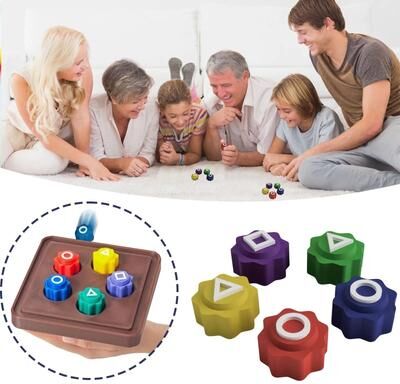
Uplifted Finds Korean Traditional Folk Game Set Family Travel Play Kit eBring generations together with this Korean traditional folk game set featuring classic childhood games enjoyed across Korea. This cultural play kit includes multiple timeless games that encourage movement strategy and family interaction making it...83,97 $*Shipping: 0,00 $Secure redirect to the provider
-
What are adverbial particles?
Adverbial particles are words that are used to modify verbs, adjectives, or other adverbs. They are often used to indicate direction, location, or manner. In English, adverbial particles are commonly used in phrasal verbs, where they are combined with a verb to create a new meaning. For example, in the phrasal verb "look up," the adverbial particle "up" modifies the meaning of the verb "look." **
-
What is the difference between formulating an adverbial clause as an adverbial phrase and formulating an adverbial phrase as an adverbial clause? Aren't they the same thing?
Formulating an adverbial clause as an adverbial phrase involves expressing a clause (a group of words containing a subject and a verb) as a single adverbial phrase, typically by removing the subject and verb. On the other hand, formulating an adverbial phrase as an adverbial clause involves expanding a phrase (a group of related words without a subject and verb) into a full clause by adding a subject and verb. While both adverbial clauses and adverbial phrases serve to modify verbs, adjectives, or other adverbs, they are not the same thing due to their structural differences and the presence or absence of a subject and verb. **
-
How do adverbial clauses work?
Adverbial clauses function as adverbs within a sentence, providing information about time, place, manner, condition, purpose, or reason. They often begin with subordinating conjunctions such as "when," "where," "how," "if," "because," and "although." These clauses can modify verbs, adjectives, or other adverbs, adding detail and context to the main clause. Adverbial clauses can be placed at the beginning, middle, or end of a sentence, and they help to connect ideas and show the relationship between different parts of a sentence. **
-
What is an instrumental adverbial?
An instrumental adverbial is a type of adverbial that provides information about the means or instrument used to perform an action. It answers the question "how?" or "by what means?" For example, in the sentence "She cut the vegetables with a knife," the adverbial phrase "with a knife" is instrumental, indicating the tool used to perform the action of cutting. Instrumental adverbials are important for providing additional details about the action being described. **
* All prices are inclusive of VAT and, if applicable, plus shipping costs. The offer information is based on the details provided by the respective shop and is updated through automated processes. Real-time updates do not occur, so deviations can occur in individual cases. ** Note: Parts of this content were created by AI.